Solid Shelf Construction
Historical merchandise labels solid kiln shelf; plate, edge and thickness are physically checked against drawings.
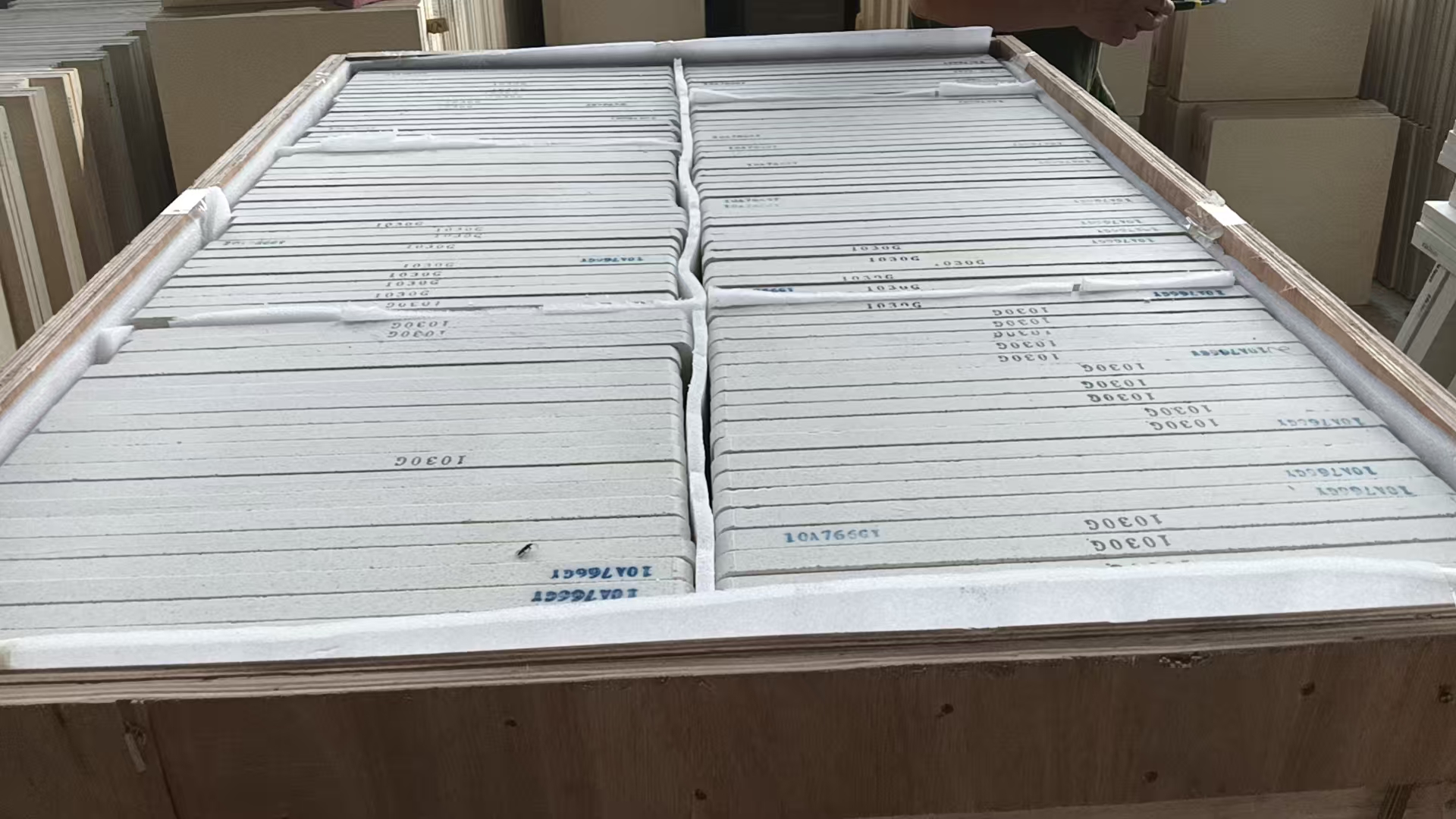
Solid shelves support ceramic ware during firing and allow multi-tier loading. Specify the shelf span, support points, load and firing conditions.
Photos are reference materials. Confirm dimensions, tolerances, service temperature, load and application conditions for your order.
The sketch shows the component features to discuss against your project drawings.
Historical merchandise labels solid kiln shelf; plate, edge and thickness are physically checked against drawings.
It is confirmed by the size of the furnace, the spacing of the bearings, the load and the stacking.
Appearances, sizes and acceptance items are agreed to for specific projects and are not subject to unwarranted performance commitments.
Provide drawings or samples, operating conditions, quantity and delivery requirements.
Product records identify these products as solid cordierite–mullite kiln shelves. Confirm the product grade, dimensions and operating limits against the project documentation.
Keeps the original detailed picture and size drawings at the bottom entry.
You can zoom in by clicking on a picture.
Recent photos provided by the user can see the panel, edge and layer of the stacked plate.
The user provided a package with photographs of the scene; the specific product model and the location of the site were to be verified.
The original details are shown in the photo area, which can be viewed in relation to the panel and stacking.
Historical images show equipment, kiln furniture and ware. The site, production batch and project attribution remain to be confirmed.
The production, packaging and delivery conditions are project-based.
The historical combination includes other kiln furniture forms for understanding the supporting environment.
These applications are based on available product records. Confirm suitability for the specific project.
Solid panel application for industrial kilns; unrecognized openings, weight reduction or venting instructions are not included on this page.
The use of text as historical commodity information is not equivalent to verified delivery cases.Check kiln type, temperature zone, atmosphere, load, installed position and mating structure against drawings or samples.
When separate live photographs are not available to prove their practical application, other commodity photographs are not used for filling.These application and industry photos were cropped from historical product image 04. Confirm site attribution and relevance to your project.
Historical images are included for reference. Site ownership and project attribution remain to be confirmed.
Grouped by image content, you can view the big picture by clicking on the picture. The removed picture is kept only in the history catalogue; the rest of the picture is uploaded in the original; the description only describes what is visible.
Pictures 2-4, 6-7, 10 live photographs for users. See the combination of ceramics, kiln shelf and laminates; whether the specific plate is the commodity, the location of the photograph and the project affiliation have not yet been verified.
Pictures 8-9, 11-17 display large alien plates and production lines in different forms from the “solid kiln shelf” commodities on this page. This group only refers to the relevant kiln furniture and manufacturing scenes and does not represent the model, production process or delivery case.
The following three watermarks are taken from the user's watermark PDF. The 1st is solid kiln shelf drawings; the 2nd and 3rd is support post fitting drawings for the purpose of understanding the relevant kiln furniture structure. The size, material and applicability of the diagram is based on the project confirmation file.
Use these sketches to discuss the design. Confirm component shape, openings and load requirements against approved drawings.
Provide the component geometry, operating conditions and delivery requirements.
Panel length, width, thickness, round corner, hole or slot and permitted deviation
Position of the bearing point, spacing, number of stacking layers, kiling empty and drop-out
Burn products in shape, load distribution, hot zone, atmosphere and cooling conditions
Packaging, delivery, size acceptance and accompanying information requirements
Historical scales and charts are used for project communication purposes.
The long, wide, public, allowed temperature, load and lifetime are based on the technical information of the project after its confirmation.
Discuss the component shape, material, structure and operating conditions.
Ask About This Product ↗Specify the kiln type, installation location, operating conditions and expected quantity.
Confirm dimensions, interfaces, assembly fit and tolerances.
Confirm material, inspection criteria and delivery conditions.
Quotation is based on confirmed specifications, quantity, packing and delivery requirements.
Provide photos or drawings of the existing part, dimensions, support layout, quantity and operating conditions.